Copper Cathode Grade A: What LME Registration and ASTM B115 Actually Require
Grade A is the designation almost every cathode buyer asks for, and it is usually explained as a purity number. It is not one. Grade A is a ceiling on what the plate may contain, and the purity figure quoted alongside it is a consequence of that ceiling rather than a separate specification.
Grade A is a limit, not a score
Three standards do most of the work in this trade: ASTM B115 in the United States, BS EN 1978 in Europe, where the designation is Cu-CATH-1, and GB/T 467 in China. They are written in the same shape. Each lists a set of elements with an individual maximum in parts per million, and then caps the total of those elements as a group. In the ASTM and EN tables that group total is 0.0065 per cent.
That structure is what makes the purity numbers confusing. When the listed impurities are held below the group ceiling, the copper content is pushed above 99.99 per cent by arithmetic rather than by a separate promise to deliver that figure. Metal from established producers therefore analyses at or above 99.99 per cent in normal commercial delivery, while the tighter contractual minimum that circulates in some markets describes a floor for acceptance rather than the standard's definition.
The practical consequence for a buyer is that asking only for a purity figure gives away control. Two lots can both be described as 99.99 per cent copper and behave differently, because the figure does not tell you which elements are sitting near their ceilings. The analysis has to be read element by element.
What each ceiling is protecting
The elements are capped in a deliberate order of severity, and the ordering is a useful guide to what to check first. The tightest limits apply to the elements that are almost insoluble in copper: bismuth is held at the lowest level in the table, with selenium and tellurium close behind. These are the additions that cause cracking during hot working and drawing even at concentrations that leave the purity statement looking perfectly respectable.
The middle group, including arsenic, antimony, lead and sulphur, affects hot working and electrical behaviour rather than producing immediate cracking. Sulphur in particular has to be controlled because it embrittles the metal when it is worked hot. Iron and nickel raise resistivity and are capped partly for that reason.
Oxygen is the exception that proves the rule, because it is controlled rather than minimised. Its level is what separates electrolytic tough pitch copper from oxygen-free copper, and it matters when the metal will later be heated in a reducing atmosphere, welded or brazed. Oxygen is dealt with in more detail in the guide on copper rod and bar.
Silver is capped for a different reason again: it is a valuable by-product and its limit is partly about keeping the metal from being worth more as an alloy than as copper. Because the ceilings are published values in the standards themselves, the copy that governs a contract should always be read directly rather than taken from a summary.
What LME registration adds
Registration is not a specification. A brand registered for delivery against the exchange contract has gone through the exchange's own vetting and can be delivered into its warehouses, which matters because a great deal of physical trade is settled against that benchmark. Non-registered cathode with an equivalent analysis is not deliverable in the same way, so it is bought on the producer's own documentation and priced separately rather than as a recognised deliverable brand.
For a buyer the difference is mostly about who carries the burden of proof. With a registered brand, the acceptance question has largely been answered by the exchange, and the material is recognised in negotiations with banks, insurers and downstream customers. With non-registered material, that verification is work the buyer or their supplier has to do, which is why the documentation matters more, not less, in those transactions.
The physical specification is part of the standard
ASTM B115 does not only fix chemistry. It also addresses the form and condition of the plate, because a cathode can meet the analysis and still be difficult to use. The defects that matter are the ones created by the deposition process and the handling afterwards: rough nodular growth, electrolyte carried out of the tank, slimes, and contamination from grease, oil or handling equipment.
Those defects are a melting problem rather than a chemistry problem. A rough or contaminated plate changes how the charge behaves in the furnace and how much material is lost to dross, and it may need cleaning before it can be charged at all. Plate dimensions and the way bundles are strapped enter the same calculation, because they determine what the receiving crane and charging equipment can handle.
What to state in the enquiry
- The standard the analysis must be certified against, and whether a named brand or an equivalent clause is acceptable.
- Whether the analysis must come from the loading port, and which inspection body you nominate.
- The acceptable bundle weight range, matched to your crane capacity and charging equipment.
- Plate dimensions, and whether full plate or cut plate suits your process.
- Surface acceptance criteria, stated rather than assumed.
- The document set that must travel with the shipment, agreed before the order is placed.
Frequently Asked Questions
Is Grade A cathode 99.99% or 99.97% copper?
Both figures circulate because they answer different questions. Grade A is defined by the individual and total impurity ceilings in ASTM B115 and BS EN 1978. When those ceilings are met, the copper content is pushed above 99.99 per cent by arithmetic. The lower figure appears in contracts as a minimum acceptance level rather than as the standard's definition of the grade.
What does LME registration add if the analysis is the same?
Deliverability. A registered brand can be delivered against the exchange contract and has been vetted by the exchange, which many buyers, banks and insurers treat as a substitute for doing that verification themselves. Non-registered cathode of equivalent analysis is bought on the producer's documentation instead, which puts more weight on the certificate and the independent inspection.
Which impurity should a buyer watch most closely?
Start with the elements carrying the tightest ceilings, which are the ones nearly insoluble in copper, bismuth first. A lot that is marginally over on a trace element can still satisfy a headline purity statement while causing cracking during drawing, so the analysis should be read element by element rather than as a single number.
Products Referred to in This Guide
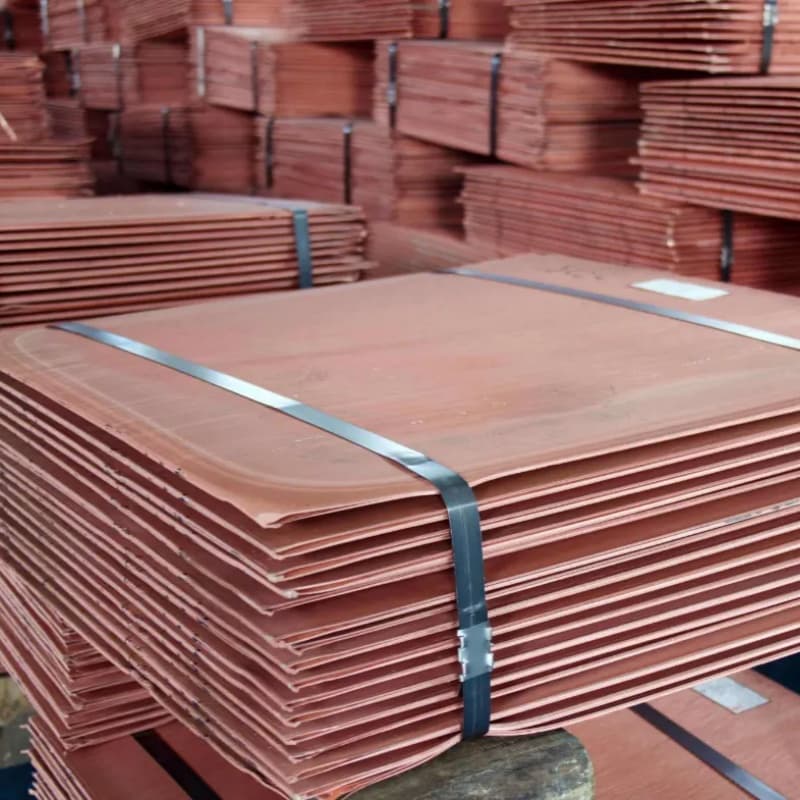
99.99% Electrolytic Copper Cathode
Premium quality electrolytic copper cathode with 99.99% purity. High conductivity cathode sheet used extensively in electrical industries and alloy production.
Get Details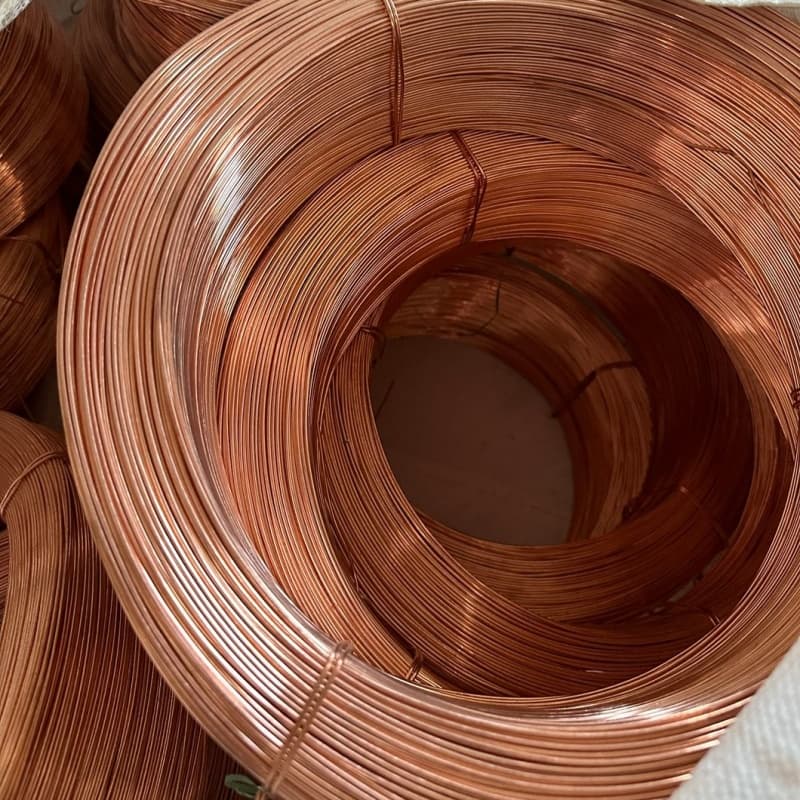
Pure 99.99% Copper Rod & Bar
High-conductivity pure copper rod for power transmission and electrical grounding. Bright surface finish with low oxygen content.
Get DetailsMore Guides
Copper
Copper Scrap Grades Explained: Millberry, Bare Bright, No. 1 and No. 2
Read the guideSourcing
How Non-Ferrous Metal Prices Are Set: LME, Premiums and Discounts
Read the guideLogistics
How Many Tonnes of Metal Fit in a 20ft Container, and Where the Difference Goes
Read the guideHave a specification to price?
Send us the grade, the tonnage and the destination port. You will get a landed-cost figure rather than a unit price, and you can nominate the inspection agency that releases the lot.