Copper Rod and Busbar: The Four Parameters That Decide Whether It Fits
Copper rod is one of the few products where the headline purity figure tells you almost nothing useful. Two rods can both be described as 99.99 per cent and behave completely differently on the same drawing line, because what decides the outcome is oxygen content, temper, tolerance and surface condition.
ETP and oxygen-free are process choices, not grades
Both are made from cathode of essentially the same analysis, and the difference is what happens in the melt. Electrolytic tough pitch copper carries a controlled level of oxygen. Oxygen-free copper is deoxidised, so that oxygen is largely removed.
Which one you want is decided by your process rather than by a notion of quality. Oxygen-free is specified where the metal will be heated in a reducing atmosphere, or welded, brazed or vacuum-brazed, because the oxygen present in tough pitch copper can react under those conditions and cause embrittlement at the joint. Tough pitch copper is the general-purpose electrical material and accounts for the majority of wire and busbar production.
The trap is treating oxygen-free as the better of the two. For a drawing line running ordinary conductor, specifying oxygen-free buys nothing and can complicate supply. The right question is what the metal will be subjected to after it arrives.
Conductivity is not purity
Electrical conductivity in this trade is expressed as a percentage of the International Annealed Copper Standard, written as %IACS. It is a measured electrical property, and it is not a chemical statement about how pure the metal is.
The two get conflated constantly, and the confusion costs buyers money. A rod can be extremely pure and still miss a conductivity requirement if it is in the wrong temper, because conductivity is affected by the metallurgical state as well as by composition. Conversely, a slight impurity can be entirely acceptable if the conductivity target is still met.
The practical rule is to specify the two separately and to name the test. If the requirement is conductivity, say so and state the measurement; if the requirement is composition, state the analysis and the standard it is certified against. Asking for one while testing for the other is how a technically compliant delivery gets rejected at goods-in.
Temper is the parameter that gets left out
Temper describes the metallurgical state of the metal, and it is the specification most often omitted from an enquiry. It governs how the material bends, how much it springs back, and how it behaves when it is fed into a machine.
Rod destined to be drawn down into wire is supplied in a state suited to further reduction, and the drawing operation itself changes the temper as it goes. Bar destined for busbar is supplied in a state that has to hold its final shape under load, in a switchgear cabinet or on a support, without deforming.
Because temper changes the answer to how the material performs, it belongs in the enquiry alongside the dimensions. It should also come with a statement of how it will be tested, so that both sides are measuring the same property against the same method.
Tolerance and surface decide whether it runs
Dimensional tolerance has to be stated against a named standard rather than referred to generally. A diameter quoted without a tolerance class is not a specification, and the difference between a loose and a tight class is often the difference between material that feeds a machine and material that has to be hand-sorted.
Surface condition follows the same logic. Oxide, scale, laps, draw marks and residual oil all map onto specific failures downstream: poor contact resistance at a busbar joint, inconsistent wetting on a soldered connection, or a break during drawing where a surface defect concentrates stress. Bright is not a specification either, and an acceptance level is better written down than assumed.
For busbar work the flatness of the bar and the squareness of the cut ends also matter, because they determine how well two pieces make contact across a joint. That is a dimensional property with an electrical consequence, and it is worth stating explicitly where the application is a current-carrying connection.
Delivery form, and how it interacts with the container
The same copper is supplied as coiled rod on a payoff, as straight lengths, or as bar cut to order. Which one suits you is decided by your handling equipment: whether you have a payoff and a straightener, whether you can shear to length, and how much space the material occupies in your yard.
Packaging follows from the form. Coils need support that prevents kinking and surface damage; straight lengths need restraint so they do not whip or chafe in transit. Either way, the packed unit weight feeds directly into the container plan, because coil and bundle weights set how many units make a load. The guide on container loading covers that calculation in more detail.
What the enquiry should state
- Form and dimension: coil, straight length or cut bar, with the diameter or cross-section.
- Whether the metal is to be tough pitch or oxygen-free, and the process reason for the choice.
- The temper, and the method by which it will be verified.
- The conductivity requirement stated as %IACS, with the measurement method.
- The dimensional standard and the tolerance class it is to be held to.
- Surface acceptance criteria, stated rather than assumed.
- Coil weight or length, and which certificate the analysis will arrive on.
Frequently Asked Questions
Should I specify ETP or oxygen-free copper rod?
It is a process decision rather than a quality ranking. Tough pitch copper carries a controlled oxygen level and is the standard electrical material for wire and busbar. Oxygen-free is chosen where the metal will be heated in a reducing atmosphere, welded or brazed, because the oxygen in tough pitch metal can react under those conditions. Both are made from cathode of essentially the same analysis.
Is %IACS the same as purity?
No. Conductivity as a percentage of the International Annealed Copper Standard is a measured electrical property; purity is a chemical statement about composition. A very pure rod can still miss a conductivity target if the temper is wrong, which is why the two are specified and tested separately rather than treated as interchangeable.
Which standard should copper rod be made to?
Whichever standard your downstream process and your customer's acceptance test are written against, named in the contract. State the tolerance class along with it, because a diameter without a tolerance class is not a specification. Where the application is a current-carrying busbar joint, add the flatness and cut-end requirements explicitly.
Products Referred to in This Guide
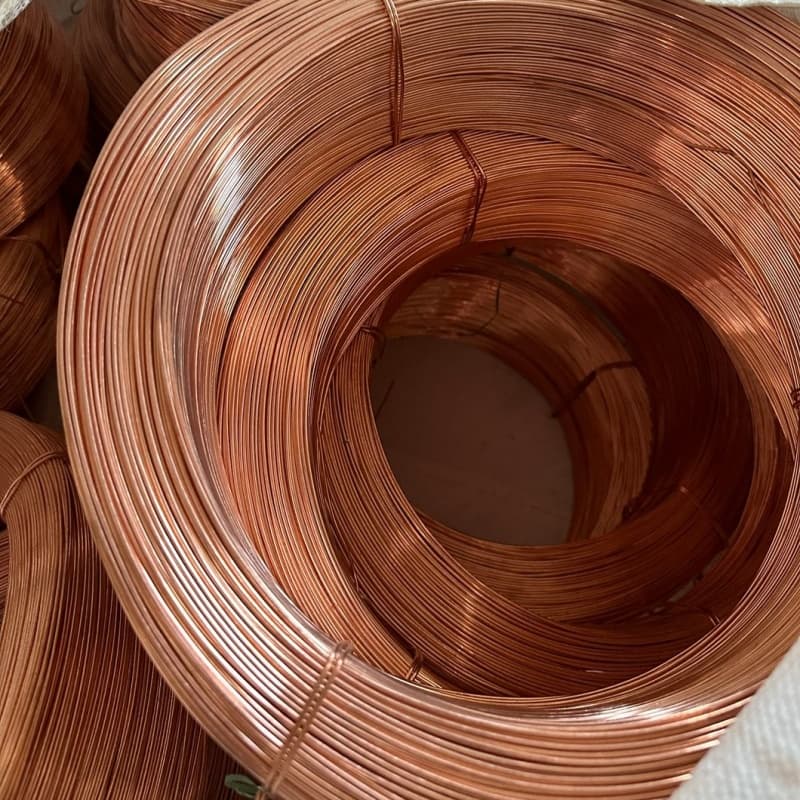
Pure 99.99% Copper Rod & Bar
High-conductivity pure copper rod for power transmission and electrical grounding. Bright surface finish with low oxygen content.
Get Details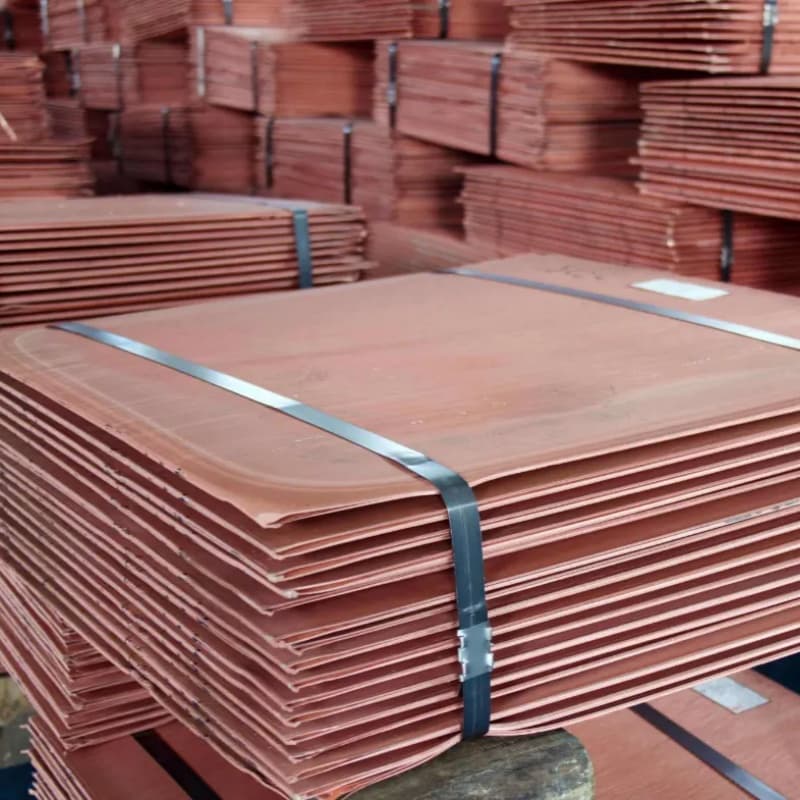
99.99% Electrolytic Copper Cathode
Premium quality electrolytic copper cathode with 99.99% purity. High conductivity cathode sheet used extensively in electrical industries and alloy production.
Get DetailsMore Guides
Copper
Copper Scrap Grades Explained: Millberry, Bare Bright, No. 1 and No. 2
Read the guideSourcing
How Non-Ferrous Metal Prices Are Set: LME, Premiums and Discounts
Read the guideLogistics
How Many Tonnes of Metal Fit in a 20ft Container, and Where the Difference Goes
Read the guideHave a specification to price?
Send us the grade, the tonnage and the destination port. You will get a landed-cost figure rather than a unit price, and you can nominate the inspection agency that releases the lot.