The Document Set Behind a Metal Shipment, and What Each One Proves
A metal shipment is traded twice: once on the specification, and once on the paperwork. The second trade is the one that decides whether the container clears, and it is the one buyers see least of until something turns out to be missing.
Two groups of documents, with different jobs
The paperwork behind a metal shipment splits into two groups that are often discussed as one list. The first group is what customs requires in order to let the goods out of the country of origin and into the destination: a commercial invoice, a packing list, a transport document, and where the destination asks for it, a certificate of origin. The second group is what the buyer's own process requires: a certificate of analysis, an independent weight certificate, and an inspection report.
The distinction matters because the two groups fail differently. Without the first group the container does not move at all, and the failure is immediate and obvious. Without the second group the container moves on schedule, arrives, and then sits at destination while someone argues about what was actually inside it. The second kind of problem is more expensive, because by then the goods are neither usable nor returnable.
The customs set
The commercial invoice states the transaction and its value, and it is also the document against which the goods are valued and examined. Because of that, the description on the invoice should match the classification under which the goods are declared. A tariff code is a legal description of the goods rather than a category label, and a vague or inconsistent description is the most common invitation to a physical examination.
The packing list is the document that maps the paperwork onto the physical cargo. It records what is in each package, with gross and net weights, dimensions and markings. It is also the document that has to agree with the loaded weight arranged at the quotation stage, and with the verified gross mass declared before loading.
The bill of lading is both the carrier's receipt for the goods and the document of title to them. In the payment structure used for most physical metal trade, a deposit is paid against the contract and the balance falls due against a copy of that bill of lading, which is precisely why the document set and the payment milestones have to be written to match each other. A trigger is only workable if it names a document that will exist and can be checked, so it belongs in the contract as a named title rather than as a general reference to documents or to the goods having shipped.
A certificate of origin states where the goods were produced. It is required by some destinations as a matter of course and by others only when a preferential tariff is being claimed, and some markets impose legalisation or specific wording requirements that take several days to arrange.
The buyer's set
A certificate of analysis states the composition of the lot. This is the document that turns a grade name into numbers, and its value depends entirely on two things: who issued it, and whether it traces to the material actually packed.
The two titles in circulation, certificate of analysis and mill test certificate, describe different issuers rather than different content. A mill test certificate is issued by the producer and traces the material to a heat or lot record. A certificate of analysis states the composition of a lot and may be issued by the producer or by an independent laboratory. What matters when the documents arrive is not which title is on the page but who signed it and whether the lot identification matches the packages on the packing list.
An independent weight certificate is normally issued at the loading port by the inspection body the buyer nominates, and the inspection report records the scope of what was actually witnessed: sampling, weighing, counting, container sealing. Both are worth commissioning precisely because they are independent of the seller, and both work best when the buyer states before the shipment what is to be witnessed rather than accepting a report of unspecified scope afterwards.
Why scrap carries more paperwork than refined metal
Recovered material is regulated differently from refined metal, and that difference shows up as documents. Depending on the destination, a scrap shipment may need a declaration that the material is non-hazardous, a certificate confirming it is free of radioactivity, and a statement about contamination and cleanliness. Material declared under a refined metal heading generally does not.
The reason is that recovered material sits on the boundary between a secondary raw material and a regulated waste, and the border officials at the destination are the ones who decide which side of that line a given lot falls on. That is why a clean, sorted, uncontaminated lot travels more easily than a mixed one, and why contamination exclusions are written into contracts in this trade.
The planning consequence is that the document list should be agreed before the booking, not after. Some of these certificates are issued at the loading port close to the shipment date, some require analysis that takes time, and some depend on a declaration the seller has to obtain from a third party. None of them benefit from being discovered at the documentation cut-off.
Settling the paperwork before the order
- Confirm the tariff code with your own customs broker first, since duty, licensing and admissibility are destination matters.
- Agree the full document list in the contract rather than in the shipping instructions.
- Nominate the inspection body and state the scope of the inspection you want witnessed.
- Decide whose weight governs, the loading port's or the discharge port's, before the dispute can arise.
- Name the document that releases each payment, since a balance against a copy of the bill of lading needs that copy to exist and to reach you.
- Check whether your destination requires legalised or specifically worded certificates, and build in the time.
Frequently Asked Questions
What documents are required to export a metal shipment?
At minimum a commercial invoice, a packing list, a transport document and the customs declaration, plus a certificate of origin where the destination requires proof of origin. Beyond those, buyers normally require a certificate of analysis, an independent weight certificate and an inspection report. Shipments of recovered material may additionally need a non-hazardous declaration and a radiation-free certificate.
What is the difference between a certificate of analysis and a mill test certificate?
The titles describe different issuers rather than different content. A mill test certificate is issued by the producer and traces material to a heat or lot record. A certificate of analysis states the composition of a lot and may come from the producer or from an independent laboratory. The useful question is who issued it and whether it traces to the material actually packed.
Who decides which tariff code applies?
The importing side does. The code determines duty, licensing and sometimes whether the goods may enter at all, so it is a destination-country question and is best confirmed with the buyer's own customs broker before the contract is signed. The description on the invoice must match it, because the code is a legal description of the goods rather than a category label.
Products Referred to in This Guide

Top-Quality Copper Wire Scrap (99.99%)
Grade A bare bright purple copper wire scrap, second-hand recovered, 99.99% Cu. Supplied as stranded bundles of about 10 cm diameter with 3 mm single wires.
Get Details
99.99% Electrolytic Copper Cathode
Premium quality electrolytic copper cathode with 99.99% purity. High conductivity cathode sheet used extensively in electrical industries and alloy production.
Get Details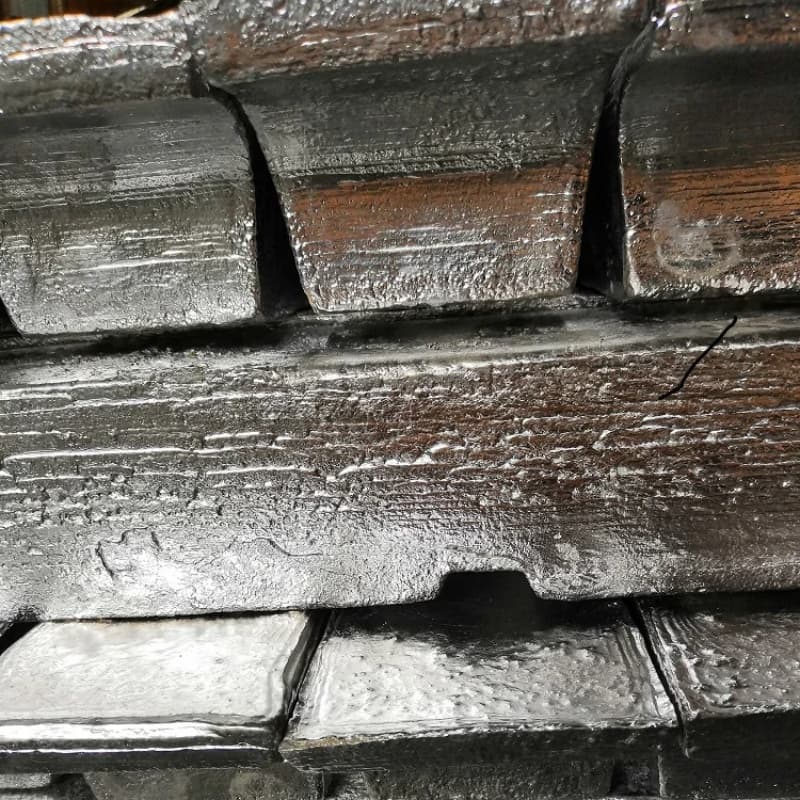
High-Purity 99.994% Lead Ingot
Standard high-purity lead ingot for battery production, radiation shielding, and industrial alloys. High density and reliable quality with competitive pricing.
Get DetailsMore Guides
Copper
Copper Scrap Grades Explained: Millberry, Bare Bright, No. 1 and No. 2
Read the guideSourcing
How Non-Ferrous Metal Prices Are Set: LME, Premiums and Discounts
Read the guideLogistics
How Many Tonnes of Metal Fit in a 20ft Container, and Where the Difference Goes
Read the guideHave a specification to price?
Send us the grade, the tonnage and the destination port. You will get a landed-cost figure rather than a unit price, and you can nominate the inspection agency that releases the lot.